Rusty-flanked Treecreeper

Rusty-flanked Treecreeper
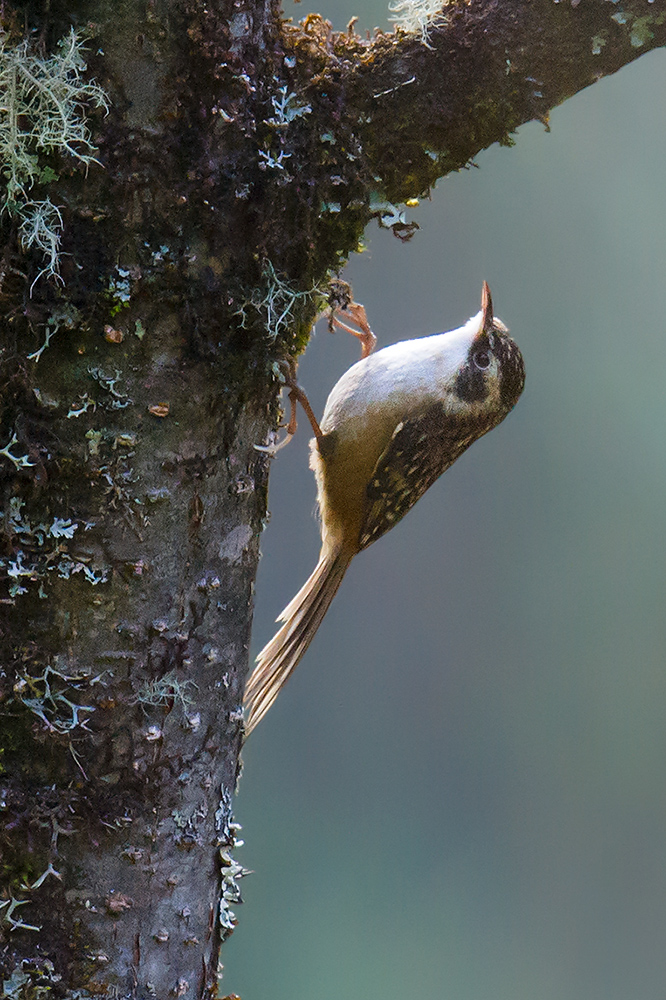
Rusty-flanked Treecreeper Certhia nipalensis has richly colored rufous flanks and breast sides that contrast with white throat and buffish-white breast. Bill shorter and straighter than Sikkim Treecreeper C. discolor and Hume’s Treecreeper C. manipurensis. Dulong Gorge (27.897732, 98.392633), Yunnan, China, elev. 2040 m (6,690 ft.), March. (Craig Brelsford)
Rusty-flanked Treecreeper
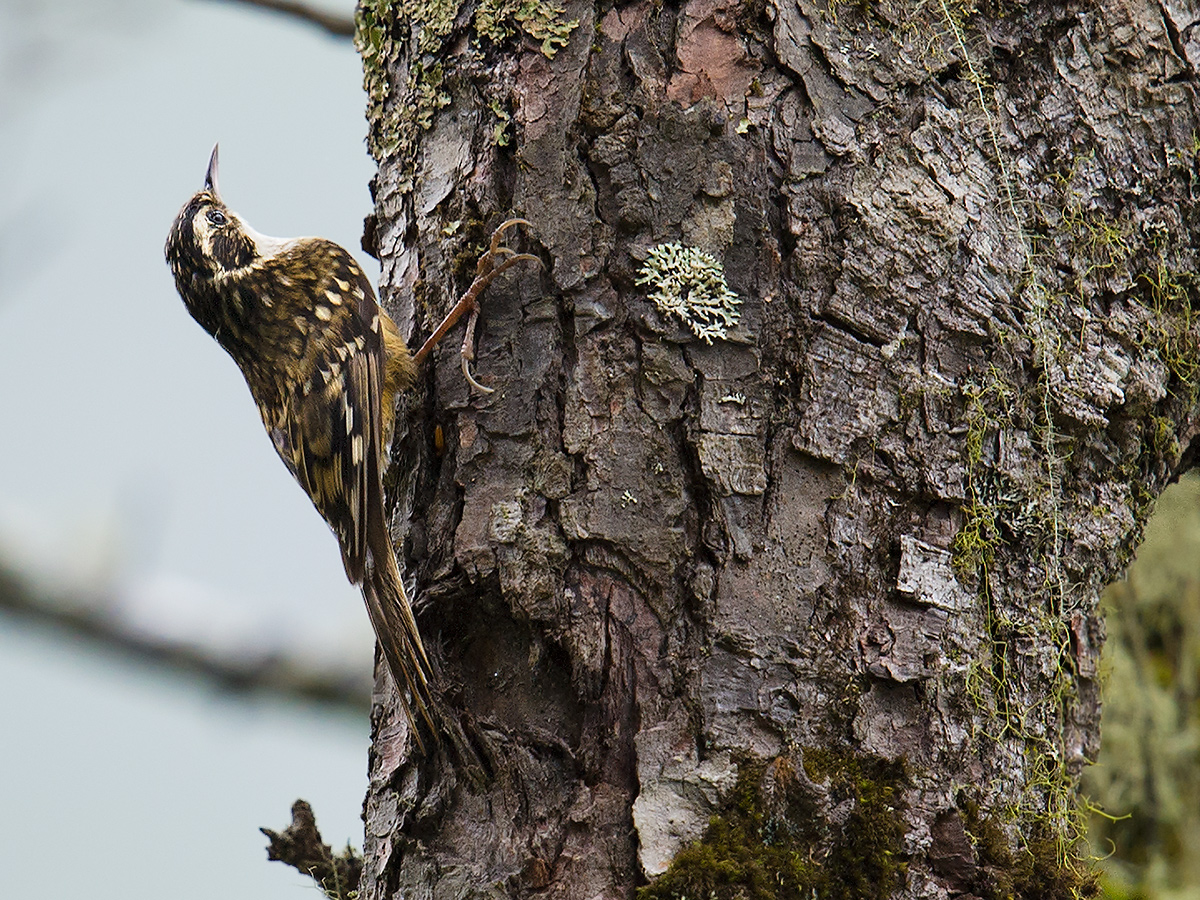
Rusty-flanked Treecreeper breeds at higher altitudes than Sikkim Treecreeper and Hume’s Treecreeper and at lower altitudes than Hodgson’s Treecreeper C. hodgsoni and Bar-tailed Treecreeper C. himalayana. The five species can overlap, however, especially in winter. Dulong Gorge (27.856700, 98.446578), Yunnan, elev. 2730 m (8,960 ft.), June. (Craig Brelsford)
Rusty-flanked Treecreeper
Rusty-flanked Treecreeper is one of a number of Himalayan species with limited ranges in China. In Yunnan occurs only in Gaoligong Mountains west of Salween River (MacKinnon 385). Also occurs extreme southern Tibet along borders with Nepal, India, and Bhutan. The species is likely common in Yunnan’s Dulong Gorge. Our teams recorded the species on our spring (June) and winter (February–March) expeditions to the gorge. We found this specimen in March at 2040 m (6,700 ft.). This was the lowest of my records; our highest (February) was at 2960 m (9,710 ft.). Coordinates: 27.897732, 98.392633. (Craig Brelsford)

In China Rusty-flanked Treecreeper Certhia nipalensis occurs only in extreme southern Tibet along borders with Nepal, India, and Bhutan and in Gaoligong Mountains in western Yunnan. HABITAT & ID Breeds at higher altitudes (in Tibet to 3500 m [11,480 ft.]) and has a more prominent buffish-white supercilium than Sikkim Treecreeper C. discolor and Hume’s Treecreeper C. manipurensis. Has shorter and straighter bill than those species and richly colored rufous flanks and breast sides that contrast with white throat and buffish-white breast. Underparts of Sikkim Treecreeper and Hume’s Treecreeper show little contrast, and Hodgson’s Treecreeper C. hodgsoni has duller, less contrasting, buffish flanks. Bar-tailed Treecreeper C. himalayana also lacks bright rufous on underparts and has conspicuous black bars on tail. Hodgson’s Treecreeper and Bar-tailed Treecreeper breed at higher elevations than Rusty-flanked, but there is overlap with those two species as well as with Sikkim and Hume’s. Overlap especially possible in winter, when all five species tend to be at lower elevations. BARE PARTS Bill blackish with pale base to mandible. Feet brown. VOICE High-pitched song introduced with tsit call emitted 1 to 3 times and followed by rapid metallic trill lasting 1 to 2 seconds. Also thin calls like other treecreepers. — Craig Brelsford

THE TREECREEPERS OF CHINA

shanghaibirding.com has research on all seven species of treecreeper in China. Click any link:

Eurasian Treecreeper Certhia familiaris
Hodgson’s Treecreeper C. hodgsoni
Bar-tailed Treecreeper C. himalayana
Rusty-flanked Treecreeper C. nipalensis
Sikkim Treecreeper C. discolor
Hume’s Treecreeper C. manipurensis
Sichuan Treecreeper C. tianquanensis

BIBLIOGRAPHY

Grimmett, Richard, Carol Inskipp, Tim Inskipp, and Sherub. Birds of Bhutan and the Eastern Himalayas. Helm/Bloomsbury, London, 2019.

MacKinnon, John. Guide to the Birds of China. Oxford University Press, 2022.

ACKNOWLEDGEMENTS

Daniel Bengtsson served as chief ornithological consultant for Craig Brelsford’s Photographic Field Guide to the Birds of China, from which this species description is drawn.

Go to Birds of China page

Reach us: info@shanghaibirding.com

Be notified every time we post. Send an
email with “Subscribe” as the subject to
info@shanghaibirding.com

Donate to Shanghai Birding!


Shanghai Birding 上海观鸟